Table Of Content
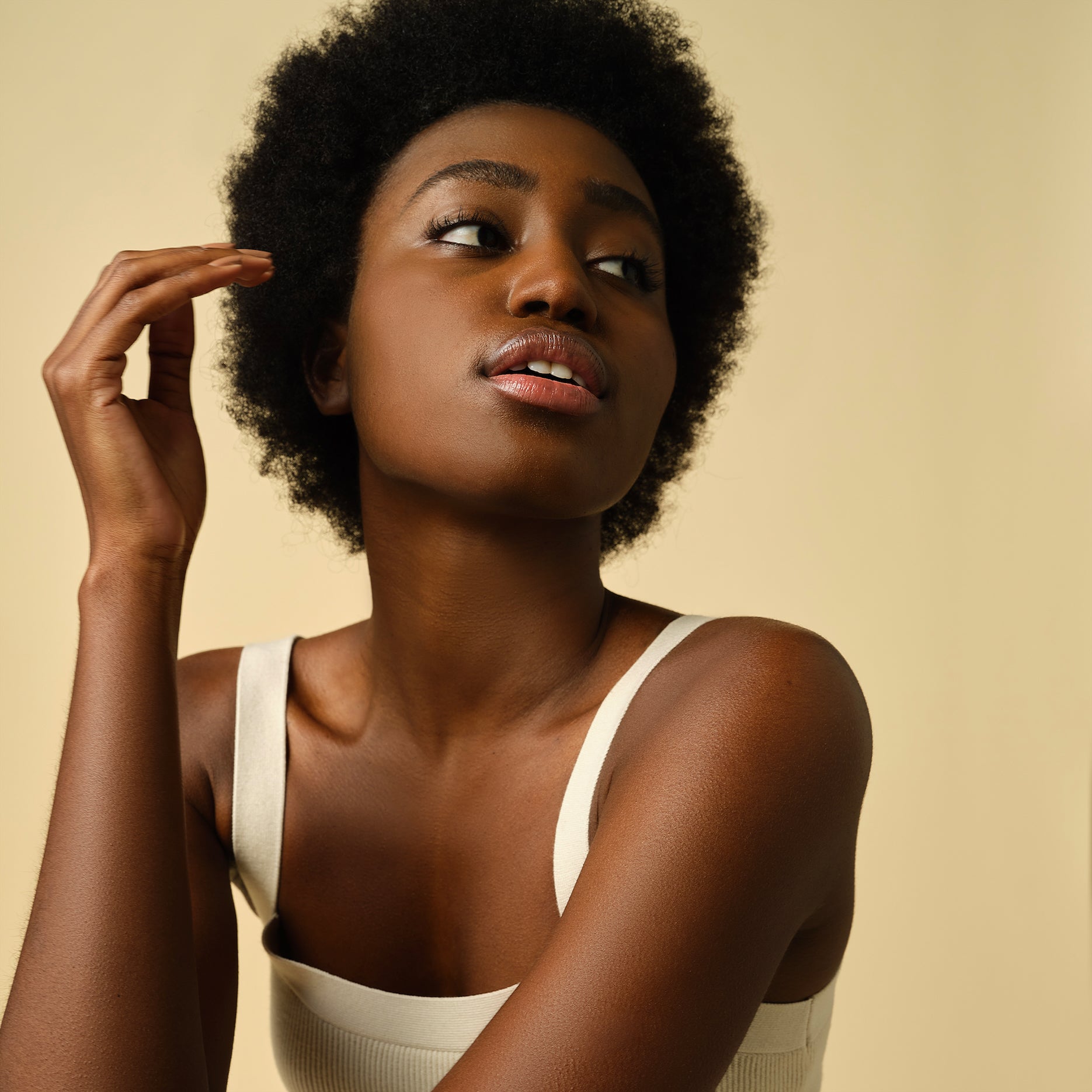
Your hair’s appearance is determined partly by the shape of your hair. By week 22 of pregnancy, babies already have all of their hair follicles, or openings in the skin where hair grows. This totals about five million hair follicles, with about one million on the head and 100,000 on the scalp. This is the largest number of hair follicles you will ever have. There is no curl here, and sometimes you may find it difficult for hair to hold a curl, even after using heat tools or curling implements. This type has a mass of very tight coils that are more zigzag than S-shaped.

Curl Pattern Chart Explained: Identifying Your Curl Type
Despite many misconceptions, this tightly coiled hair is quite fine and fragile. Coily hair grows at the same rate as other texture, however, if not treated properly it breaks more than other textures. Treat this hair type like a fine silk blouse – cleanse gently, detangle softly, and avoid harsh chemicals. Coily hair is the driest hair type, thus it is more prone to breakage and requires a gentle touch. On the surface, coily hair may seem robust, but it is actually the most fragile of all hair textures because coily hair contains the fewest cuticle layers to protect from dryness.

Deep Conditioners for Curly Hair: 3 Effective and Budget-Friendly Picks
Silk Press Guide for 2022: How to Straighten Your Natural Hair - Cosmopolitan
Silk Press Guide for 2022: How to Straighten Your Natural Hair.
Posted: Wed, 05 Aug 2020 07:00:00 GMT [source]
Pre-poo using coconut oil to retain your scalp’s natural chemistry. If you have multiple hair types within the LOIS system, then you should begin by examining the most common hair type on your head. More specifically – many naturals are interested in how to determine their hair type. When applying hair oils, detangle and separate your hair with your fingers to ensure the products are evenly distributed.
The Glycolic Acid Serum Your Skin Care Routine Needs
To enhance the natural curl pattern of 3B hair, it’s important to use curl-enhancing products like creams, mousses, or gels. To enhance the natural curl pattern of 3A hair, it’s important to use curl-enhancing products like creams, mousses, or gels. Since this type is usually frizzier than Type 2A, lightly formulated leave-in conditioners that coat the strands during humid days can add extra protection and keep the waves intact. Try Orlando Pita Well Behaved Anti-Frizz Cream Serum, the winner of the GH Beauty Lab's anti-frizz styling products test.
These single-named celebrities are well-known for their naturally curly locks, which are categorized as type 3 hair. But if you can’t make it to the salon right this second, or don’t have a trusted stylist on speed dial, we tapped a few experts to help you on your journey. “[It] asks a few questions to determine your hair characteristics and provides personalized product recommendations,” the hairstylist explains. She recommends examining your curls while they're wet—the texture will be evident.
How Do You Determine Your Hair Type?
How Much to Tip Your Hairdresser for a Cut, Trim or Color in 2024 - Cosmopolitan
How Much to Tip Your Hairdresser for a Cut, Trim or Color in 2024.
Posted: Thu, 28 Mar 2024 07:00:00 GMT [source]
By selecting the right products and techniques based on your hair porosity, you can keep your hair looking and feeling its best. Type 1B hair can be styled into a variety of different looks, from sleek and straight to voluminous and bouncy. Layered haircuts can help add volume and movement to the hair, while blunt cuts can create a sleek and polished look. Type 1B – Medium thickness, straight hair that is slightly more resistant to styling.
As mentioned, it’s more common than not for a person to have multiple curl patterns. So while a general curl type chart can help get you started, sometimes it’s best to speak with a natural hair expert who can identify your unique texture(s) and help you create a hair-care plan. To choose products for your curl type, consider its specific needs. Fine or loose curls benefit from light, volumizing products like mousses.
Here, we’ll explore curl pattern types so you can unlock your hair’s unique potential. For high porosity hair, it’s important to focus on retaining moisture in the hair. Use heavier products such as butters and oils to seal in moisture and prevent it from escaping the hair. Regular deep conditioning treatments can also help improve the hair’s overall health and reduce breakage. In terms of haircuts, 2B hair can benefit from layered cuts to add movement and volume to the hair.
The Ultimate Curl Pattern Guide: Figure Out Your Curl Type
Use hair clips or hair ties to secure each section in place and ensure that you don’t miss any patches of hair. There are other emerging curl-type systems, but honestly, most of the new ones aren’t well known. The number shown on the soft tape measure is used to determine whether your hair fits into the thin, normal, or thick, according to Fia’s Hair Typing System. You can use a soft tape measure or another method that won’t damage your hair to measure the circumference of your ponytail. Use natural emollients with a thicker consistency, such as shea butter, to get the most out of your twist-outs or wash-and-go styles after you wash.
Highlights or lowlights can be a great way to add dimension and depth to 2B hair without causing too much damage. When it comes to color, 2A hair can be colored with a range of different shades, but it’s important to avoid over-processing the hair, as this can cause damage and breakage. Highlights or balayage can be a great way to add dimension and depth to 2A hair without causing too much damage. When styling Type 1B hair, it’s important to use products that add volume without weighing the hair down. Volumizing mousses, root-lifting sprays, and dry shampoos can be beneficial in creating a fuller, more voluminous look. Using a round brush when blow-drying can also add volume and movement to the hair.
When washing 2A hair, it’s important to use a moisturizing shampoo and conditioner to prevent dryness and breakage. To avoid weighing down the hair, it’s best to avoid heavy products like oils or butters, and instead use lightweight products like mousses or sprays. For optimal health, look to a sulfate-free cleanser and conditioner. SheaMoisture’s 100% Virgin Coconut Oil Daily Hydration Shampoo and Conditioner combo work well for this hair type. “Wavy hair needs washing more frequently than curly and coily hair as the natural oils produced at the scalp find it easier to travel down the hair strands,” says Butcher. Once a week, follow your regular wash routine with a deep conditioner—one like R+Co On a Cloud Mask is sure to quench wavy curls.
Moisturizing shampoos and conditioners can help prevent dryness and breakage, while leave-in conditioners and hair oils can help control frizz and add shine. Overall, caring for Type 1A hair requires a gentle approach and lightweight products to maintain its health and natural shine. With the right care and styling techniques, Type 1A hair can be easily managed and styled to achieve a range of different looks. Hair typing is a real and widely used system in the hair care industry. It is used as a tool to categorize and describe the different textures and types of hair, such as straight, wavy, curly, and coily.
We believe that what goes on your body is as important as what goes in it. Too many hair products are made with synthetic ingredients that are irritating, damaging, or even hazardous, and the problem is worse in hair products marketed to Black women. At the moment, any hair typing system that doesn’t have a legitimate following within the curly community (or natural hair community) is considered outside of the scope of this guide. It’s the most fragile texture due to having the fewest cuticle layers protecting it from dryness.
Type 1 is straight, Type 2 is wavy, Type 3 is curly, and Type 4 is coily. Within each type are subtypes a, b, and c which further characterize the degree of curl. For example, a 3a curl pattern has well-defined, springy curls in an s-shaped pattern, while a 3c curl pattern are dense, volume-packed ringlets. Overall, caring for Type 3 hair requires a balance of moisturizing and defining products, along with a gentle approach to avoid causing frizz or damage. With the right care and styling techniques, Type 3 hair can be easily managed and styled to achieve a range of different looks. Overall, caring for 2C hair requires a balance of moisturizing and defining products, along with a gentle approach to avoid causing frizz or damage.
While there’s a range of curly hair (3a-4c), we’re focusing on 4a, 4b, and 4c hair types today. These curls form ringlets, though the shape of the curl depends on the tightness of the spiral. Curlier hair has a harder time getting natural scalp oils (sebum) to the tips of the hair, so split ends and frizz can be common. This hair is also more delicate when wet and may need softer towels and tools to help maintain and manage the curl. Identifying what type of curly hair pattern you have is key to nailing down a hair method or routine that leaves you with healthy strands. In between straight and curly is this beautiful, relaxed hair type that’s made of loose, S-shaped waves.
With the right care and styling techniques, 2C hair can be easily managed and styled to achieve a range of different looks. Overall, caring for 2B hair requires a balance of moisturizing and defining products, along with a gentle approach to avoid causing frizz or damage. With the right care and styling techniques, 2B hair can be easily managed and styled to achieve a range of different looks.


No comments:
Post a Comment